
TTR amyloidosis
wtATTR amyloidosis
In wild-type ATTR amyloidosis, no disease-causing TTR variant is identified, but the transthyretin protein may become unstable with ageing. With age, it simply becomes unstable. The disease is not inherited, it settles above all in the heart, and it was long written off as ordinary ageing — yet it can now be identified with a scan, often without a biopsy.

01
What is wtATTR?
Key idea
“Wild-type” simply means unmutated. Everyone carries this protein. In some people, age alone is enough to make it misfold.
A transport protein that turns
Transthyretin (TTR) is made by the liver and carries thyroid hormone around the body. Everyone has it, and in wtATTR the gene that codes for it is entirely normal — which is what the word “wild-type” refers to.
For reasons that remain unexplained, the protein changes shape as the years pass. It becomes insoluble, aggregates into amyloid fibrils, and those fibrils settle in the tissues.
A heart disease of later life
The deposits collect chiefly in the heart muscle. For a long time the condition was called senile amyloidosis, as though it were nothing more than the heart growing old.
It was also thought to affect only white men over 75. It is now recognised in women, and in people of every ethnic background — and it can begin as early as the age of 50. That old assumption is one reason the diagnosis is still missed.
02
How wtATTR develops
No mutation, no inflammation, no rogue clone of cells. Just an ordinary protein that, with time, stops holding its shape.
Step 01
A normal protein
Transthyretin is produced by the liver and carries thyroid hormone. Its gene is not mutated: this is the wild type, the ordinary version we all carry.
Step 02
Age destabilises it
With the years, and for reasons still not understood, the protein changes conformation. It loses its solubility.
Step 03
Fibrils form
The destabilised protein aggregates into insoluble amyloid fibrils, which the body has no way of clearing.
Step 04
The heart stiffens
Deposits thicken the ventricle walls. The heart fills poorly; later, it contracts less well, and output falls.
Carpal tunnel syndrome — often in both hands — can appear five to ten years before any sign of heart trouble. In an older adult, it deserves attention.
03
Symptoms
The heart dominates the picture, but it is rarely the first thing to speak. The hands, the ears and the feet often give warning years earlier.
The heart
Filling and pumping
The ventricle walls thicken and the muscle grows rigid, so the heart fills poorly. Later its contraction weakens too, and output falls. This brings breathlessness — first on exertion, then at rest, when speaking or lying down — along with fatigue, swelling of the legs, weight gain and palpitations.
Heart rhythm
Conduction disturbed
Amyloid interferes with the heart’s electrical system. The rhythm may run too fast or too slow, and in some cases the heart can stop. A pacemaker or a defibrillator is sometimes required. Fainting, dizzy spells and palpitations are the signs to report.
Nerves and hearing
Often overlooked
Hearing may decline. The feet may feel as though they are wrapped in cotton wool, or prickle with pins and needles. Taken alone these seem like the ordinary complaints of age — which is precisely the difficulty.
Carpal tunnel syndrome
Frequently the very first sign, and frequently in both hands at once. It can precede the cardiac symptoms by five to ten years.
Everyday life
Stairs become hard work. Standing up brings dizziness. Weight falls away without explanation, and the bowels alternate between diarrhoea and constipation.
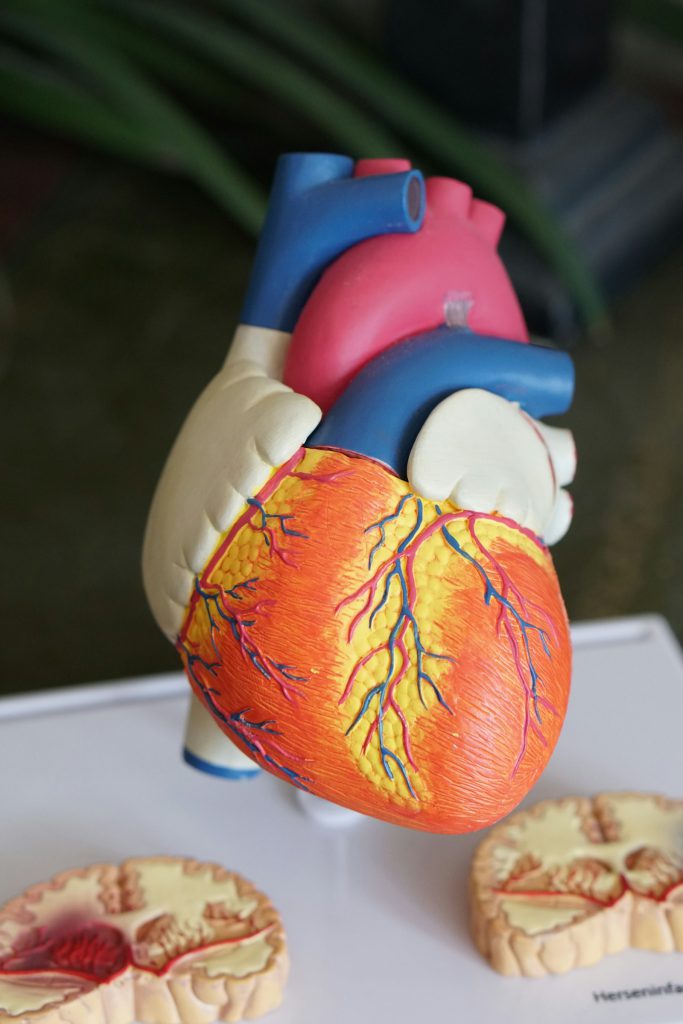
When to seek advice
Each of these is common on its own in later life. Several together, and particularly alongside a thickened heart that nobody has been able to explain, are worth investigating.
- Swollen ankles, spreading up the legs
- Palpitations or an irregular heartbeat
- Fatigue and weakness
- Shortness of breath on light activity
- Difficulty climbing stairs
- Numbness or tingling in the hands and feet
- Dizziness on standing up
- Diarrhoea alternating with constipation
- Unintended weight loss
An unexplained thickened heart in an older adult, together with carpal tunnel syndrome in both hands, should prompt a test for ATTR.
04
How wtATTR is diagnosed
This is where wtATTR differs from every other form of amyloidosis. In most cases the diagnosis can now be made from a scan, without taking a piece of the heart. It is one of the real advances of the past two decades.
01
Look at the heart
Echocardiography, or cardiac MRI, shows the thickened ventricle walls. This is usually what raises the suspicion in the first place.
02
Bone scintigraphy
The heart muscle takes up a bone tracer — a striking and highly characteristic finding. Where no other type of amyloidosis is suspected, this is enough to make the diagnosis, and no biopsy is needed.
03
Rule out AL
Blood and urine are checked for the monoclonal light chains of AL amyloidosis, which is treated in an entirely different way. If doubt remains, a biopsy is taken — of the salivary glands, and sometimes of the heart itself.
04
A genetic test
This is the only way to know whether the transthyretin is mutated — hereditary ATTR — or wild-type. The answer matters for you, and for your family.

05
Treatment
Treatment aims to slow or prevent further amyloid formation and to manage cardiac symptoms and complications. Disease-modifying therapies act on transthyretin itself or on its production, while supportive treatment is tailored to each patient.

Stabilise the protein
TTR stabilisers are a disease-modifying treatment option for eligible patients with ATTR cardiomyopathy. They bind to transthyretin and help stabilise the protein, reducing its tendency to misfold and form new amyloid fibrils. Approved indications and access vary between countries.
Other disease-modifying approaches may reduce transthyretin production or target amyloid deposits. Their approval, availability and place in treatment vary between countries and should be discussed with a specialist team.
Stabilisers
TTR stabilisers bind to transthyretin and help keep the protein stable, reducing its tendency to misfold and form amyloid fibrils. Availability and approved indications vary between countries.
Gene silencers
TTR gene-silencing therapies act further upstream by reducing the amount of transthyretin produced by the liver. Their use in wild-type ATTR cardiomyopathy depends on local regulatory approval and clinical indication.
On the horizon
Therapies designed to promote amyloid clearance and other disease-modifying approaches are under investigation. Their future role will depend on evidence from clinical trials and regulatory approval.
Managing the heart — and what to avoid
Cutting down on salt, together with diuretics, eases breathlessness and swelling. Where the rhythm is irregular, anticoagulation is used to stop clots forming inside the heart.
There is a catch worth knowing about. Several drugs prescribed as a matter of course in ordinary heart failure — beta-blockers and vasodilators among them — can make wtATTR worse, and are sometimes withdrawn. That is a decision for your cardiologist. Never stop a treatment on your own.

06
Why early diagnosis matters
Caught before the walls thicken
Involvement elsewhere in the body can bring the heart disease to light at a very early stage — before any thickening of the ventricle walls has appeared at all. The scan finds what the heart has not yet had time to show.
The signs that come first
Carpal tunnel syndrome in both hands. A hearing that fades. Feet that tingle. Each is easy to file away under old age; together, years ahead of any breathlessness, they are the earliest thing this disease says about itself.
For a long time this was simply put down to growing old. It now has a name, a scan, and a treatment.
FAQ
Common questions
Is wtATTR inherited?
No. In wtATTR the transthyretin gene carries no mutation, and nothing is passed on to your children. But the two forms cannot be told apart by their symptoms, which is exactly why a genetic test is part of the diagnosis: it distinguishes wild-type from hereditary ATTR, where relatives may need to be offered testing.
Why is it called “wild-type”?
“Wild-type” is the biologist’s term for a gene or a protein in its ordinary, unaltered state — as opposed to a mutated variant. It says nothing about the disease being wild or aggressive. It simply means: the protein everybody has.
Does carpal tunnel syndrome mean I have wtATTR?
Almost always, no. Carpal tunnel syndrome is common and usually has nothing to do with amyloidosis. What is worth investigating is the combination: carpal tunnel in both hands, in an older adult, alongside a thickened heart that no one has been able to account for.
Will I need a heart biopsy?
Usually not. Bone scintigraphy allows the diagnosis to be made without a biopsy, provided no other type of amyloidosis is suspected. A biopsy is reserved for cases where doubt persists, and it is often taken from the salivary glands rather than the heart.
What is transthyretin?
A protein made by the liver, whose job is to carry thyroid hormone through the bloodstream. Everyone has it. In ATTR amyloidosis it loses its shape and aggregates — either because the gene is mutated (hereditary ATTR) or, as here, simply with age.
This page is intended as general information for patients, families and healthcare professionals. It does not replace medical advice. Approved indications, reimbursement and availability of ATTR treatments vary between countries. Patients should discuss locally available options with their specialist team.